

Most people think good oral health begins and ends with brushing and flossing. While those habits are essential, researchers now understand that your mouth is home to a complex community of microorganisms known as the oral microbiome.
A healthy oral microbiome contains hundreds of species of bacteria, fungi, and other microbes that normally coexist in balance. Many of these organisms are beneficial and help protect your teeth and gums. Problems can arise when that balance is disrupted, allowing harmful bacteria to become more dominant.
An imbalanced oral microbiome has been associated with common oral conditions such as plaque buildup, tooth decay, gum inflammation, and persistent bad breath.
In this guide, we’ll explore seven possible signs that your oral microbiome may be out of balance and discuss practical, evidence-based ways to support good oral health.
What Is the Oral Microbiome?
The oral microbiome refers to the collection of microorganisms that naturally live inside your mouth. These microbes are found on your teeth, tongue, gums, cheeks, and saliva.
In a healthy mouth, beneficial and potentially harmful microbes exist in equilibrium. Factors such as diet, smoking, oral hygiene, certain medications, and dry mouth can shift this balance.
When the microbial community becomes disrupted—a condition sometimes called oral dysbiosis—the risk of dental problems may increase.
Why Is a Healthy Oral Microbiome Important?
A balanced oral microbiome helps:
- Support healthy gums
- Protect tooth enamel
- Assist normal saliva function
- Help control plaque formation
- Contribute to fresher breath
- Maintain a stable oral environment
Maintaining this balance is considered an important part of overall oral health.
Looking for an oral probiotic?
Some people choose to include an oral probiotic as part of their daily oral care routine alongside brushing, flossing, and regular dental visits.
👉 Learn more about ProDentim in our detailed review
7 Signs Your Oral Microbiome May Be Out of Balance
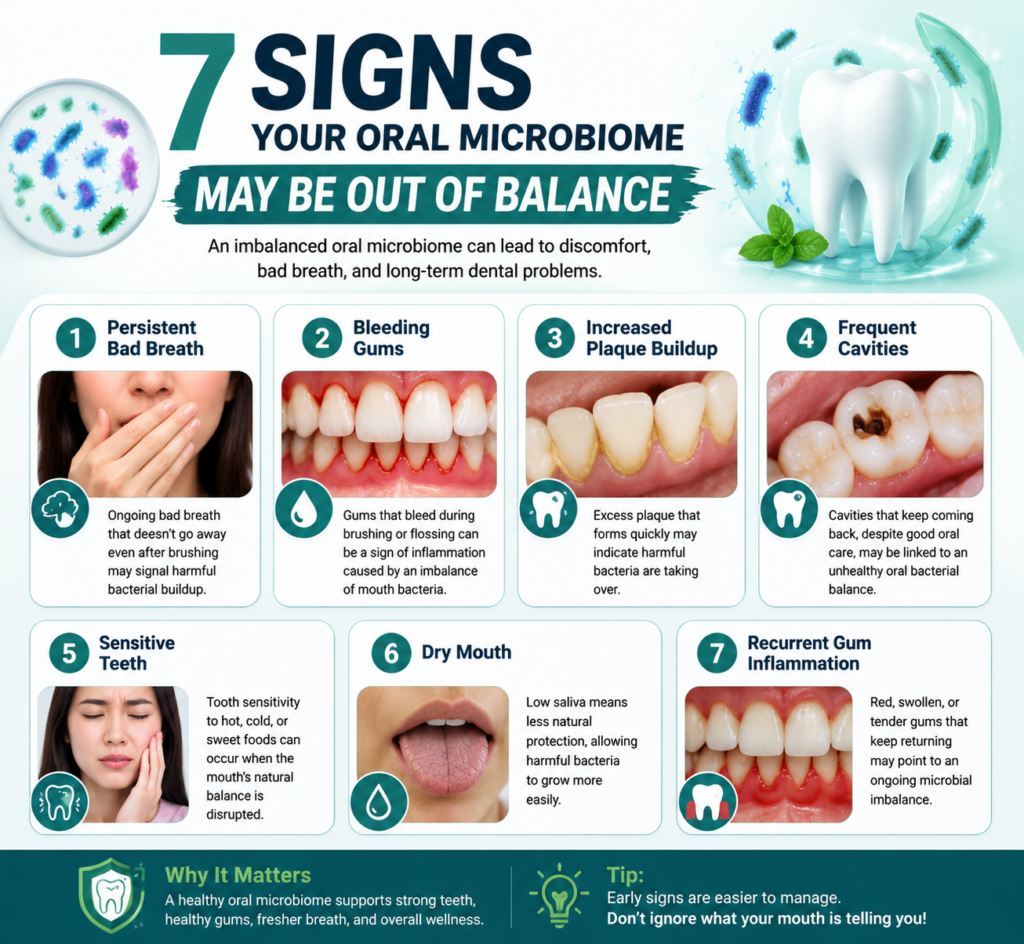
1. Persistent Bad Breath
Occasional bad breath is common, but persistent bad breath that doesn’t improve with brushing may indicate bacterial changes in the mouth.
Certain bacteria produce sulfur-containing compounds that contribute to unpleasant odors.
Possible contributing factors include:
- Poor oral hygiene
- Dry mouth
- Gum disease
- Tongue coating
- Smoking
2. Bleeding Gums
Healthy gums generally should not bleed during brushing or flossing.
Frequent bleeding can be a sign of gum inflammation, often related to plaque accumulation and changes in the oral bacterial community.
If bleeding continues for more than a few days, consult a dental professional.
3. Increased Plaque Buildup
Plaque is a sticky biofilm composed largely of bacteria.
Although plaque forms naturally, excessive buildup may indicate that harmful bacteria are becoming more dominant.
Regular brushing, flossing, and professional cleanings help keep plaque under control.
4. Frequent Cavities
Tooth decay develops when acid-producing bacteria break down sugars and produce acids that gradually weaken tooth enamel.
If cavities occur despite maintaining a regular oral hygiene routine, it may be worth discussing additional preventive strategies with your dentist.
5. Sensitive Teeth
Tooth sensitivity has many possible causes, including:
- Worn enamel
- Gum recession
- Tooth grinding
- Dental procedures
- Tooth decay
While changes in the oral environment may contribute indirectly, persistent sensitivity should always be evaluated by a dental professional.
6. Dry Mouth
Saliva plays a major role in maintaining the oral microbiome.
It helps:
- Wash away food particles
- Neutralize acids
- Protect tooth enamel
- Limit bacterial overgrowth
Dry mouth may occur due to:
- Certain medications
- Aging
- Medical conditions
- Dehydration
- Mouth breathing
Without enough saliva, harmful bacteria may multiply more easily.
7. Recurrent Gum Inflammation
Red, swollen, or tender gums may signal ongoing irritation.
If gum inflammation continues despite regular brushing and flossing, it may indicate an underlying dental issue that requires professional evaluation.
Early treatment helps prevent more serious gum disease.
Recognize These Signs?
If you’re experiencing persistent bad breath, bleeding gums, or recurring oral health concerns, maintaining good oral hygiene is essential. Some people also explore oral probiotics as part of their routine.
What Can Disrupt the Oral Microbiome?
Several everyday habits can influence the balance of microorganisms in your mouth.
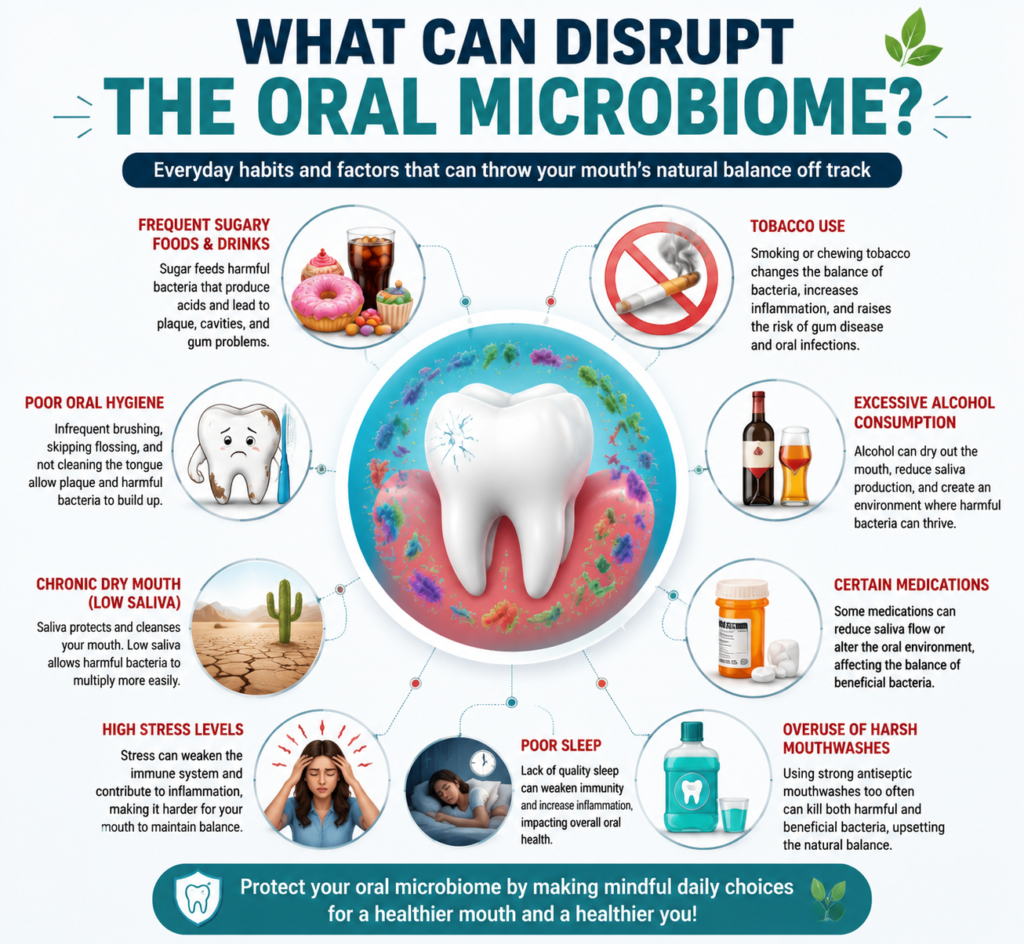
Common factors include:
- Frequent sugary foods and drinks
- Tobacco use
- Excessive alcohol consumption
- Poor brushing habits
- Inadequate flossing
- Chronic dry mouth
- Certain medications
- High stress levels
- Poor sleep
Understanding these risk factors can help you make healthier choices.
How to Support a Healthy Oral Microbiome Naturally
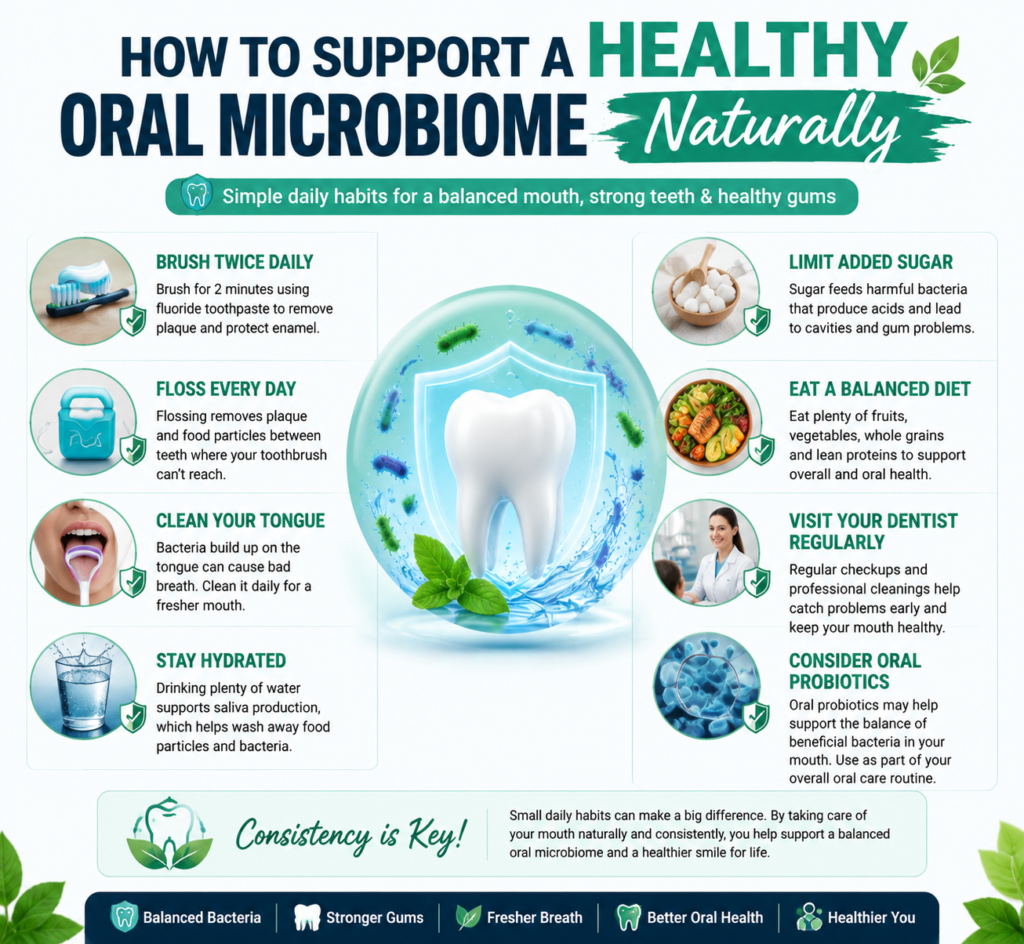
Brush Twice Daily
Brush for two minutes using fluoride toothpaste.
Replace your toothbrush every three to four months.
Floss Every Day
Flossing removes plaque from areas your toothbrush cannot reach.
Daily flossing supports healthier gums over time.
Clean Your Tongue
Many odor-causing bacteria accumulate on the tongue.
Using a tongue scraper or gently brushing your tongue may help improve oral hygiene.
Stay Hydrated
Adequate hydration supports saliva production.
Saliva plays an important role in protecting teeth and maintaining a balanced oral environment.
Limit Added Sugar
Frequent sugar consumption provides fuel for acid-producing bacteria associated with tooth decay.
Reducing sugary snacks and beverages may help lower cavity risk.
Eat a Balanced Diet
A diet rich in fruits, vegetables, whole grains, dairy (or fortified alternatives), and lean proteins supports overall health, including oral health.
Crunchy vegetables may also stimulate saliva production.
Visit Your Dentist Regularly
Routine dental checkups allow early detection of oral health issues before they become more serious.
Professional cleanings also help remove hardened plaque (tartar) that brushing alone cannot remove.
Support Your Oral Microbiome
Daily habits are the foundation of good oral health. Some people also choose to add an oral probiotic to their routine.
✔ Click Here To Read Our Complete ProDentim Review
Where ProDentim Fits Into an Oral Care Routine
Maintaining good oral health starts with consistent daily habits. Brushing twice a day with fluoride toothpaste, flossing daily, cleaning your tongue, eating a balanced diet, limiting sugary foods and drinks, staying hydrated, and visiting your dentist regularly remain the foundation of a healthy smile.
Some people choose to add an oral probiotic supplement, such as ProDentim, as part of their overall oral care routine. ProDentim is marketed as a supplement designed to support the balance of beneficial bacteria in the mouth. While there is ongoing scientific interest in the role of oral probiotics, research is still evolving, and results can vary depending on the specific probiotic strains studied and the individual using them.
It’s important to view ProDentim as a complement to—not a replacement for—good oral hygiene practices or professional dental care. Taking an oral probiotic cannot substitute for brushing, flossing, routine dental cleanings, or treatment of existing dental conditions.
If you’re considering adding ProDentim to your routine, it may be worth discussing with your dentist or healthcare provider, especially if you have ongoing gum disease, frequent cavities, dry mouth, or other oral health concerns. They can help determine whether an oral probiotic is appropriate for your individual needs.
Want to learn more about ProDentim’s ingredients, pricing, and customer guarantee?
👉 Read the Full ProDentim Review Here
A Balanced Daily Oral Care Routine
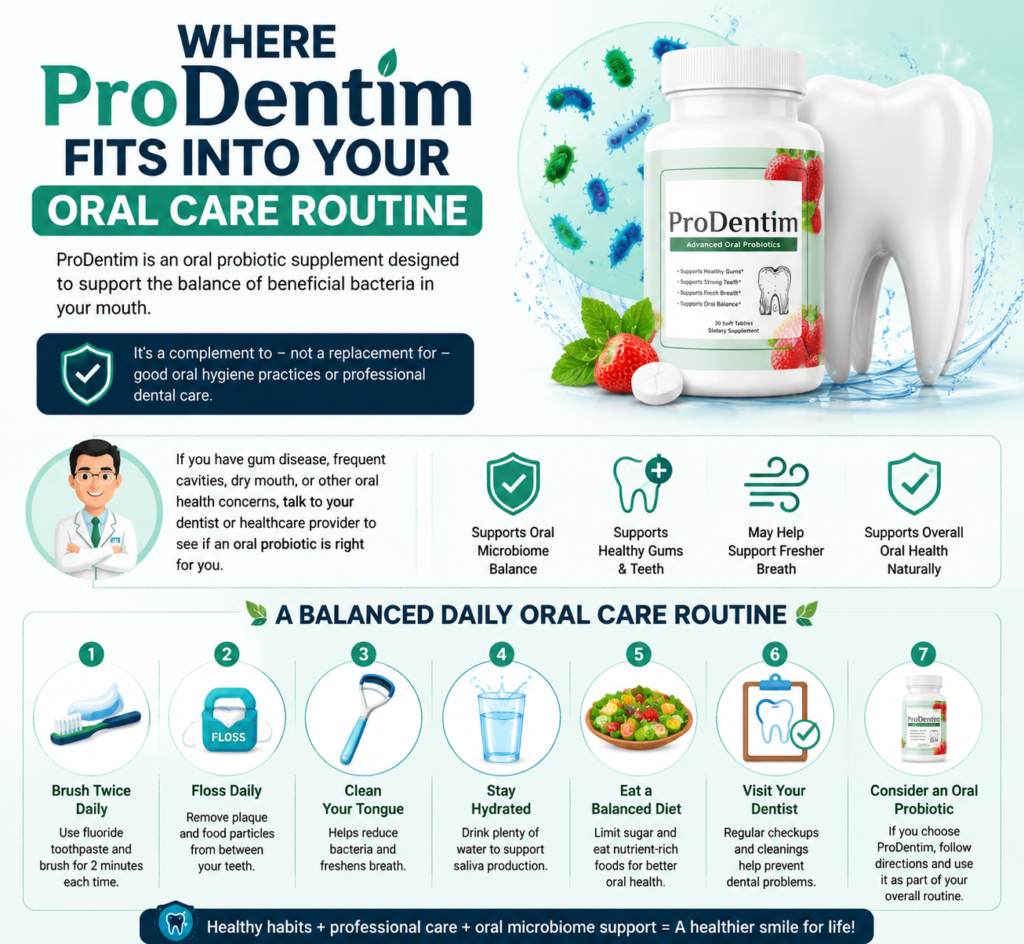
By combining healthy daily habits with regular professional dental care, you can help support a balanced oral environment and maintain healthy teeth and gums over the long term.
Are Oral Probiotics Helpful?
Researchers continue to study whether certain probiotic strains may support oral health.
Some early studies suggest that specific oral probiotics may help influence the balance of microorganisms in the mouth. However, evidence remains mixed, and oral probiotics should not replace established oral hygiene practices or professional dental care.
If you’re considering an oral probiotic supplement, discuss it with your dentist or healthcare provider, particularly if you have ongoing dental concerns or underlying medical conditions.
Frequently Asked Questions
What causes an oral microbiome imbalance?
Common factors include poor oral hygiene, high sugar intake, smoking, dry mouth, certain medications, and inadequate saliva production.
Can I restore my oral microbiome naturally?
Healthy daily habits such as brushing, flossing, eating a balanced diet, staying hydrated, and attending regular dental checkups support a healthy oral environment.
Are bad breath and gum disease related?
Bad breath can have many causes, including gum disease, tongue coating, dry mouth, and certain foods. Persistent bad breath should be evaluated by a dental professional.
How often should I visit a dentist?
Most adults benefit from routine dental checkups every six months, although your dentist may recommend a different schedule based on your individual needs.
Final Thoughts
Your oral microbiome is an important part of maintaining healthy teeth and gums. While it’s normal for the microbial community in your mouth to change over time, persistent symptoms such as bleeding gums, bad breath, frequent cavities, or gum inflammation deserve attention.
The most effective approach to supporting oral health remains consistent brushing and flossing, limiting added sugars, staying hydrated, eating a balanced diet, and keeping up with regular dental visits.
If you’re experiencing ongoing oral health concerns, consult a qualified dentist for a personalized evaluation and treatment recommendations.
Ready to Support Your Oral Health?
Healthy teeth and gums begin with consistent brushing, flossing, a balanced diet, and regular dental checkups. If you’re also interested in learning about oral probiotics, we’ve put together an in-depth guide covering ProDentim’s ingredients, pricing, and commonly asked questions.

[…] 👉 7 Signs Your Oral Microbiome Is Out of Balance (And How to Restore It Naturally) […]