

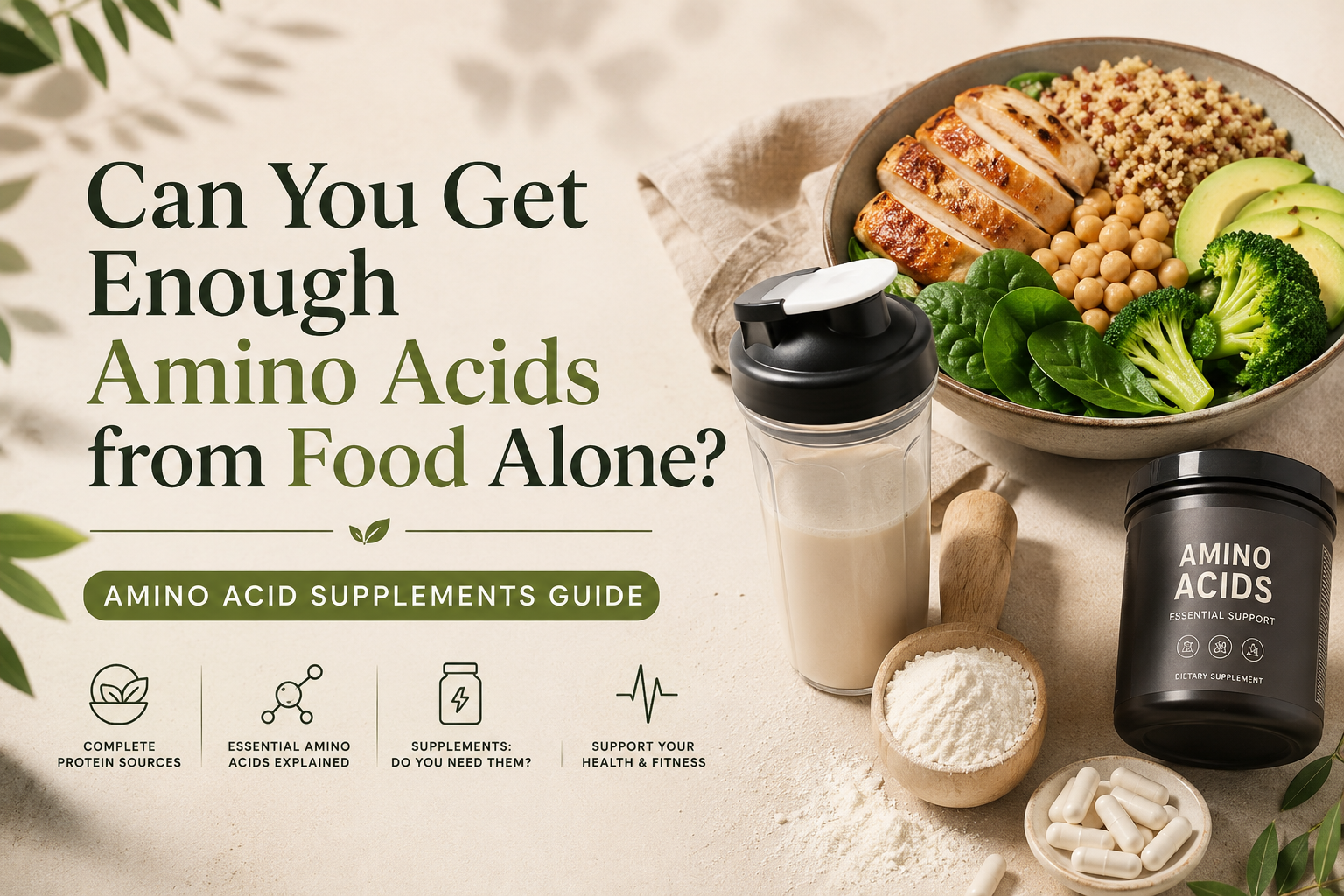
Introduction:
Amino acids are often called the building blocks of life—and for good reason. They play a critical role in muscle growth, tissue repair, hormone production, immune function, and overall health.
Many people believe a balanced diet automatically provides all the amino acids the body needs. But is that really true in today’s fast-paced lifestyle? And when do amino acid supplements make more sense than relying on food alone?
Let’s break it down.
What Are Amino Acids and Why Are They Important?
Amino acids are organic compounds that combine to form proteins. Your body uses them to:
- Build and repair muscle tissue
- Support metabolism and energy production
- Improve workout recovery
- Maintain healthy skin, hair, and nails
- Support brain function and mood
There are 20 amino acids, divided into three groups:
1. Essential Amino Acids (EAAs)
These cannot be produced by the body and must come from diet or supplements.
2. Non-Essential Amino Acids
Produced naturally by the body.
3. Conditionally Essential Amino Acids
Needed in higher amounts during stress, illness, or intense physical activity.
Can You Get Enough Amino Acids from Food Alone?

The Short Answer: Sometimes—but not always.
A well-planned diet can provide amino acids, but several real-world factors make it difficult for many people.
Common Food Sources of Amino Acids
- Lean meats, poultry, fish
- Eggs and dairy
- Beans and lentils
- Nuts and seeds
- Whole grains
While these foods contain protein, not all protein sources offer a complete amino acid profile, especially plant-based options.
Why Food Alone May Not Be Enough
1. Incomplete Protein Sources
Most plant proteins lack one or more essential amino acids, making it harder to meet daily requirements—especially for vegans and vegetarians.
2. Increased Needs Due to Lifestyle
You may need more amino acids if you are:
- Physically active or an athlete
- Strength training or doing endurance workouts
- Recovering from illness or injury
- Over 40 (protein synthesis efficiency declines with age)
3. Poor Digestion or Absorption
Even if you eat enough protein, your body may not absorb amino acids efficiently due to:
- Gut health issues
- Stress
- Aging
4. Calorie Limitations
Meeting amino acid needs through food alone can require high calorie intake, which isn’t ideal for those trying to manage weight.
When Do Amino Acid Supplements Make Sense?
This is where high-quality amino acid supplements become a smart, practical solution.
Benefits of Amino Acid Supplements
- Deliver precise, bioavailable amino acids
- Fast absorption compared to whole foods
- No excess calories or fats
- Convenient for busy lifestyles
- Ideal for pre-, intra-, or post-workout use
Who Should Consider Supplementing?
✔ Athletes and gym-goers
✔ Vegans and vegetarians
✔ Older adults
✔ People with low protein intake
✔ Anyone focused on muscle recovery and performance
Food vs Supplements: A Smart Combination
Rather than choosing one over the other, the best approach is combining both.
- Whole foods provide vitamins, minerals, and long-term nutrition
- Amino acid supplements fill nutritional gaps quickly and efficiently
For example, using a balanced Essential Amino Acid (EAA) supplement around workouts can help support muscle recovery without increasing meal size.
Choosing the Right Amino Acid Supplement
When selecting an amino acid supplement, look for:
- A complete EAA profile
- Clinically balanced ratios
- Easy-to-digest formula
- No unnecessary fillers or sugars
👉 Our premium Amino Acid Supplement is designed to deliver all essential amino acids in optimal ratios, helping support muscle recovery, performance, and daily wellness—especially when food alone falls short.
It’s ideal for:
- Pre- or post-workout nutrition
- Daily supplementation for active individuals
- Supporting protein intake on low-calorie diets
Final Thoughts
While a healthy diet is the foundation of good nutrition, getting enough amino acids from food alone isn’t always realistic. Modern lifestyles, dietary restrictions, and increased physical demands make supplementation a smart and effective option.
By combining whole foods with a high-quality amino acid supplement, you can ensure your body gets exactly what it needs—every single day.
Ready to Optimize Your Amino Acid Intake?
Support your body with a clean, effective amino acid supplement designed for performance, recovery, and overall health.
Fuel smarter. Recover faster. Live stronger.

[…] Also Read>> Can You Get Enough Amino Acids from Food Alone? […]
[…] Also Read>> Can You Get Enough Amino Acids from Food Alone? […]